



A 30-hour confinement has ended, but the three-week shutdown exposes a deeper governance failure, with students demanding the reinstatement of the former vice-chancellor and academic activities still paralysed.
The release of Chittagong University of Engineering and Technology (CUET) Vice-Chancellor Professor Sheikh Shariful Alam from nearly 30 hours of confinement has ended the immediate standoff on campus, but it has done little to resolve the crisis that has paralysed the university for more than three weeks.
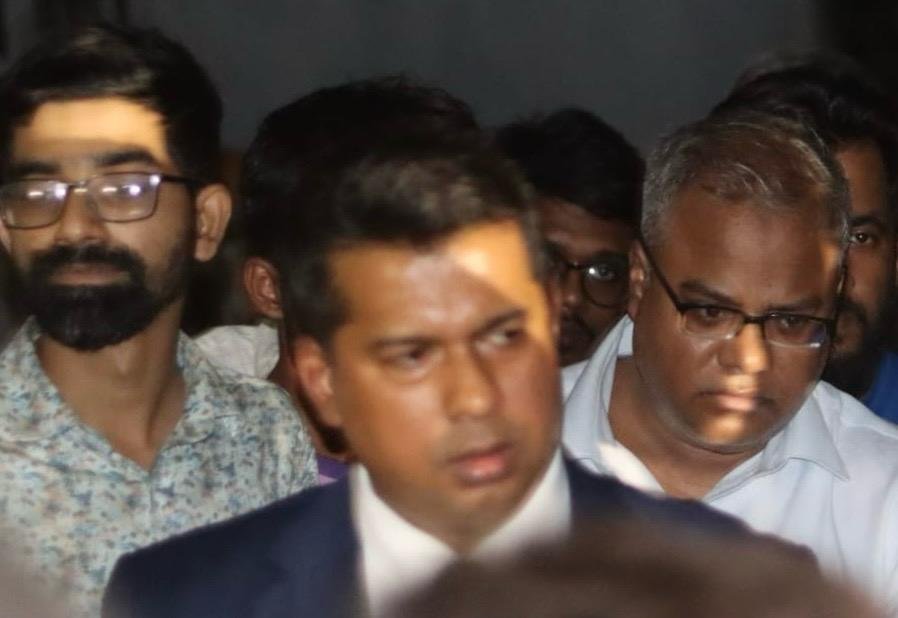
Escorted out of an administrative building by police on Tuesday evening, October 13, the newly appointed vice-chancellor left the campus amid chants of protest from students who continue to reject his appointment. The confrontation followed his arrival on campus on Monday morning, when he entered his office after breaking locks placed there by protesters, triggering an escalation that culminated in his confinement inside the building.
The episode has exposed a disturbing institutional reality: removing the vice-chancellor from a locked room does not remove the deadlock from the university. The fundamental dispute remains unresolved, and thousands of students continue to face uncertainty over their education.
The crisis began on September 21, when the Education Ministry removed Professor Abu Sadat Muhammad Sayem from the vice-chancellor’s post, just 56 days after he took office, and appointed Professor Sheikh Shariful Alam, formerly of Khulna University of Engineering and Technology (KUET), as his successor. Students launched a shutdown the following day, demanding Sayem’s reinstatement. Teachers, officers and employees subsequently joined the movement through work stoppages and sit-ins.
By October 13, the confrontation had evolved from a dispute over an administrative appointment into a prolonged institutional paralysis, with classes, examinations and routine university activities suspended.
A leadership dispute turns into a governance crisis
The central question is no longer simply whether Professor Shariful Alam can occupy the vice-chancellor’s office. It is whether the university can function under a leadership arrangement that a significant section of its campus community refuses to accept.
The administration’s attempt to establish the new vice-chancellor physically on campus failed to restore authority. Instead, his arrival triggered another confrontation, followed by a blockade and his eventual removal under police escort. The sequence demonstrates the limitations of enforcing an appointment without first addressing the resistance surrounding it.
At the same time, the students’ demand for Sayem’s reinstatement has become a condition for ending the shutdown. Their position has hardened through weeks of protest, while the participation of teachers, officers and employees has widened the dispute beyond the student body.
This creates a difficult impasse. The government has exercised its administrative authority to change the university’s leadership, but that decision has not translated into effective institutional control. Protesters, meanwhile, have demonstrated their capacity to disrupt normal operations, but the continued shutdown carries mounting costs for the very students whose interests the movement claims to defend.
Neither the appointment nor the protest, on its own, has produced a functioning university.
Students Pay the Price of Administrative Uncertainty
CUET students remain the biggest victims of the prolonged standoff. Final examinations in at least six departments have reportedly been postponed indefinitely, threatening academic schedules and future career opportunities. For engineering students, lost classroom time, laboratory sessions and research cannot easily be recovered.
The crisis also raises fundamental questions about university governance. Why was Professor Abu Sadat Muhammad Sayem removed after just 56 days in office? What prompted his replacement, and why has the government failed to provide an explanation convincing enough to address campus concerns?
Neither Confrontation Nor Coercion Offers a Solution
Students have legitimate grounds to demand transparency, but confining a vice-chancellor for nearly 30 hours cannot resolve an institutional dispute. Equally, the government cannot expect an appointment order alone to restore authority when confidence among students and teachers has eroded.
The Way Forward
The Education Ministry must urgently bring students, teachers and university authorities to the negotiating table. The government should explain the leadership change transparently and pursue a credible settlement that respects appointment procedures while addressing campus grievances.
CUET also needs an immediate academic recovery plan, including revised examination schedules and arrangements to compensate for lost teaching time.
The vice-chancellor’s release has ended the immediate confrontation, not the crisis. A vice-chancellor can be escorted out of a building, but an institutional crisis cannot be escorted off campus. Until a credible settlement restores normal academic activities, CUET’s future remains uncertain.
