



Built from a journalist’s salary and a conviction that overlooked environmental stories deserve attention, the Bangladesh-based news portal is now connecting reporters across South Asia, with an eight-member team preparing to cover COP31.
For nearly a month, Bangladeshi journalist Shamsuddin Illius struggled to convince his editor that a story about disappearing naming traditions deserved prominent space in the newspaper.
The story explored how climate change was affecting more than livelihoods, settlements and the environment. It was also reshaping cultural identities and traditions in vulnerable communities, including the names through which people expressed their relationship with the natural world.
Illius believed the story mattered. His editor was initially unconvinced. After repeated discussions, the editor finally agreed. The report was published as the newspaper’s lead story.
For Illius, the experience exposed a problem he had encountered repeatedly during his reporting career: important environmental stories often had to compete for attention with politics, conflict and other daily headlines.
It also gave him an idea. What if there were a newsroom where climate change, the environment and biodiversity were not occasional subjects, but the central focus of journalism?
That question eventually led to the creation of The Climate Watch, an independent environmental news portal launched in Bangladesh in November 2024.
Less than two years later, the publication is preparing to send eight journalists to the UN climate summit in Antalya, Türkiye, while building reporting connections across Bangladesh, Nepal, Pakistan and Sri Lanka.
A newsroom born from frustration
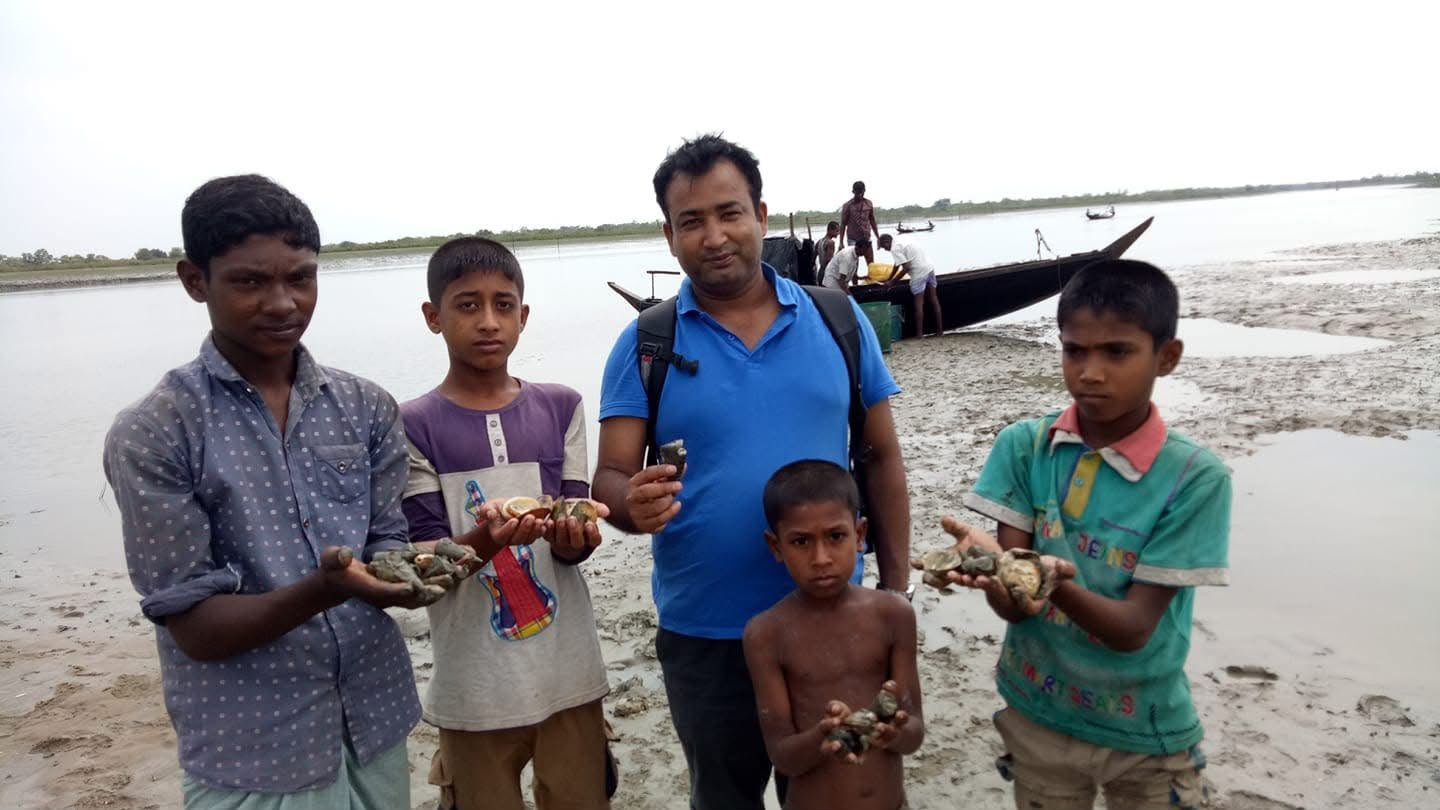
Illius had spent years travelling through Bangladesh’s coastal districts, reporting on communities exposed to cyclones, river erosion, salinity intrusion, flooding and displacement.
He met families who had lost their homes, farmers struggling to protect their livelihoods and communities confronting environmental changes over which they had little control.
“I came into journalism to give a voice to the voiceless,” Illius said. “I have always believed that journalism should represent people who are marginalised and whose suffering often remains outside the headlines.”
He said his experiences in climate-vulnerable areas shaped his decision to establish a specialised publication.
“I have visited most of the coastal areas of Bangladesh. I have seen people losing their homes, livelihoods and identities because of climate-related disasters. Their suffering affected me deeply. The Climate Watch came from that conviction that their stories must be told.”
The idea was straightforward but financially difficult: create a publication dedicated to climate change, environmental protection, biodiversity, sustainability and climate justice, rather than competing for audiences through political controversy or sensational news.
Illius began researching how to establish an independent digital newsroom, exploring possible names, website development and the practical requirements of running a news organisation.
During a journey back from Dhaka, he discussed the idea with fellow environmental journalist Mostafa Yousuf, who helped him settle on the name The Climate Watch.
Illius subsequently purchased the domain and began developing the website.
There was no major investor behind the project. According to Illius, he financed its development, initial testing and launch entirely from his journalism salary.
The platform began trial operations before its formal launch in Dhaka on November 3, 2024.
Later, limited advertising revenue, journalism grants and project-based collaborations helped support its reporting activities.
The struggle for recognition
Establishing the website was only one challenge. Securing official recognition as a news portal required another sustained effort. Saleh Noman, a senior journalist and secretary of the Chattogram Metropolitan Journalists Union, recalled Illius’s determination to complete the registration process.
“Illius is an extremely hardworking journalist. Once he sets a goal, he works relentlessly to achieve it,” Noman said.
“When he was trying to obtain official registration for The Climate Watch, he repeatedly travelled to Dhaka, faced financial difficulties and even had to borrow money to continue the process.”
Noman said he supported Illius in different capacities during the publication’s development.
“His thinking has always gone beyond geographical boundaries. The Climate Watch is an example of that vision,” he said.
The publication eventually secured registration with the government’s Press Information Department.
For Illius, official recognition was an important milestone, but the greater challenge remained producing journalism with limited resources.
Investigations that travelled beyond Bangladesh
The Climate Watch began covering subjects that often receive less sustained attention in mainstream newsrooms, from biodiversity loss and groundwater depletion to the environmental consequences of large infrastructure projects.
One investigation examined deforestation associated with the National Special Economic Zone in Mirsarai, Chattogram, documenting damage to coastal forests, wildlife habitats and communities dependent on natural resources.
The reporting subsequently entered the public debate over the project’s environmental consequences. In December 2025, The Business Standard reported that findings published by The Climate Watch were among materials cited in public-interest litigation concerning the economic zone.
The publication has also investigated alleged irregularities in the World Bank-financed $175 million Sustainable Forests and Livelihoods project, known as SUFAL.
Drawing on Anti-Corruption Commission findings, its reporting highlighted a gap between plantation targets and verified planting at a site in Ramu, Cox’s Bazar. The World Bank, however, said its supervision had not identified fiduciary irregularities.
Other reports have examined tree-cover loss, groundwater stress, renewable energy, climate finance and the environmental costs of digital development.
The publication’s reporting has been cited or linked by international outlets including The Guardian, The Diplomat, Mongabay and The New Humanitarian, while academic researchers have also referenced its work.
Recognition through an international investigation
In 2026, The Climate Watch participated in a cross-border investigation that received recognition through three international journalism honours.
The project, Dark Side of the Boom, was coordinated by Internews’ Earth Journalism Network and brought together 14 newsrooms across 11 countries to investigate the environmental consequences of Asia’s expanding digital infrastructure.
Illius contributed the Bangladesh chapter, examining electricity demand, groundwater extraction and environmental oversight associated with data centres.
The investigation received a 2026 Covering Climate Now Journalism Award in the Large Projects & Collaborations category and the Society of Publishers in Asia Award for Excellence in Reporting on the Environment in the Regional/Local category.
The wider project also received a special citation associated with the 2026 Osborn Elliott Prize for journalistic innovation.
The recognition belonged to the multinational reporting collaboration, with The Climate Watch among the participating newsrooms.
For a publication established with its founder’s personal savings, participation in such a project represented a significant milestone.
From birds to climate justice
The Climate Watch’s editorial work extends beyond investigative reporting and international negotiations.
Its Birds in Climate Crisis initiative aims to produce 100 short documentary videos examining bird species, changing habitats and environmental threats. The publication says 25 episodes have been completed.
The bilingual series features birds including the Silver-billed Munia, Rufous Woodpecker, Plain Prinia, Indian Pond Heron and Green Bee-eater.
The outlet also reports on forest conservation, wetlands, wildlife, light pollution and ecological restoration.
A dedicated climate justice focus examines the experiences of women, young people, Indigenous communities, coastal populations and families displaced by environmental disasters.
Alongside publishing, the organisation conducts journalism training and runs an annual pre-COP reporting fellowship with the Center for Participatory Research and Development, helping journalists develop specialised skills in climate reporting.
Taking South Asian voices to COP31
The next test of the publication’s regional ambitions will come in Antalya, where COP31 is scheduled for November 9-20.
The Climate Watch plans to deploy eight journalists, including five full-time reporters and three regional contributors, from Bangladesh, Nepal, Pakistan and Sri Lanka.
Its coverage will focus on climate finance, adaptation, loss and damage, energy transition and the experiences of climate-vulnerable communities.
The organisation says its reporting network connects approximately 100 climate and environmental journalists across South Asia.
Md Ibrahim Khalilullah, Executive Editor of The Climate Watch, said the aim is not merely to report what negotiators say, but to connect international decisions with people’s experiences.
“We are striving to become a voice for South Asia in global climate negotiations,” he said.
“Our countries are among the most vulnerable to climate change, and it is essential that we tell our own stories rather than rely solely on others to tell them for us.”
The publication has also sought cooperation with Shakti Foundation, Young Power in Social Action and Change Initiative for its COP31 reporting.
Having covered COP28 in Dubai, COP29 in Baku, COP30 in Belém and the Bonn climate negotiations, The Climate Watch now aims to give greater space to regional concerns at the Antalya summit.
Its journey remains that of a young, resource-constrained publication trying to establish a sustainable place in environmental journalism.
But the idea that began with one reporter struggling to get an overlooked story published has developed into something larger: a newsroom built around the belief that environmental change deserves continuous scrutiny and that communities facing its consequences should help shape the stories the world hears.
