




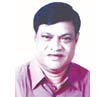
If you own an industrial enterprise, you become an industrialist. They are a class by themselves, maintain a different life style, and the common people have little knowledge of what their family life is like.
But what is the nature of their social life? The society of the industrialists is also different. We may not be able to reach the level of life they live in now. But are they born with a silver spoon in the mouth?
That does not seen right. Those who are industrialists for two or three generations are different. But the first generation industrialists generally are not born in sky scrappers; they are people born on the ground. Later, they may have become industrialists through their own efforts and hard work.
Whatsoever, it cannot be denied that industrialists are also human beings like us. They are also born with human qualities. Those who establish industries, also establish schools, colleges, universities, clubs, organisations and organise sport events. Khalilur Rahman, Chairman of KDS Group of Industries, is basically an industrialist, secondly a patriot, thirdly an educationist, fourthly a philanthropist and finally, a social worker. During the political upheavals in the country, there is a lot of fuss about businessmen. Some businessmen have taken hundreds of thousands of crores of Taka from banks but have not refunded the money, or have disappeared from the country. Some businessmen have smuggled millions of Taka abroad or have deposited the same in the Swiss banks; some businessmen have legally or illegally seized plots, some businessmen have manipulated the banks to grab shares and occupy the board of directors. Countless such scammers keep coming out one after another. The media is also tired of writing all this. Only the ACC (Anti Corruption Commission) seems to be tireless.
Following the One-Eleven (1/11) Caretaker Government, massive arrest was made against the businessmen as per list prepared by the government. At that time, it was said that the records of many businessmen were hidden in the laptops of General Masud Uddin and Brigadier Bari. After the One-Eleven Government’s take-over, Bashundhara Group founder Ahmed Akbar Sobhan alias Shah Alam fled from the country to escape the Intelligence Agency. Many other businessmen were released by the ruling authority after seizing cheques worth hundreds and thousands of crores of Taka from them. Following the so-called August-2024 coup, Aziz Khan of Summit Group, Salman Rahman of Beximco, Anvir, son of Shah Alam of Bashundhara Group, FBCCI President Mahbubul Alam Talukdar, Lotus Kamal and Saiful Alam Masud of S. Alam Group were alleged and searched in different cases. Anvir stayed away for a few months while Masud went abroad to defend himself.
They were accused for not refunding their debts, laundering money abroad, committing bank fraud, etc. I have given examples of how ‘wrath’ was inflicted on businessmen twice and tried to show whom this wrath was inflicted on. However, I did not name everyone, perhaps I don’t know everyone’s name.
However, the political storm also destroyed the spirit of politics, and it is true that political leaders and activists were more harassed than businessmen. During the One-Eleven regime, Sheikh Hasina and Khaleda Zia, the two main political leaders of the country, were about to be ‘minus’ from politics. On 5 August, 2024, only Sheikh Hasina was removed from politics and state power, while her main opponent Khaleda Zia went abroad for medical treatment due to illness and returned to the country and finally, the Lord took her away.
Among the businessmen, KDS Chairman Khalilur Rahman is perhaps the only industrialist who is surprisingly free from all the sins and filth of corruption and is gracefully existent like a fair man free from all viciousness. He owns banks, insurance and many industrial factories. But neither the Anti-Corruption (ACC) members, nor any member of the police has raided his office or factories, or sought permission for investigation.
Only recently, he was imprisoned for a day in an ACC case; not his own, but a corruption case involving members of Sikdar Group.
He appeared before the court in the ACC case. It is a case of embezzlement of loan from the National Bank. What I understood from the details of the case published in the newspapers, the main accused are four members of the Sikdar family. Abdul Awal Mintu, Sikdar Group and Khalil Saheb are the entrepreneurs of National Bank. Mintu Saheb had left the bank earlier. Sikdar Group is still associated with the bank. Khalil Saheb was involved in the case for cooperating with them. Khalil Saheb is a clean businessman. He has been running business and industries, keeping himself remarkably free from all kinds of corruption, opacity and illegal activities.
He is busy with his business and trade. He has no time or need to look beyond his business. His life passes saying “Ya-Nafsi, Ya-Nafsi” through his various businesses, industries and factories. The welfare and well-being of the workers and employees of his business establishments are all he is occupied with.
He maintains a low profile; he is not in the habit of publicity to attract attention of others. He believes to survive by keeping himself away from publicity and propaganda carefully. He is a supporter and patron of almost all political parties in the country. But he is not even an ordinary member of any political party. Leaders of different political parties have approached him to get him into their respective political parties. But it has not been possible to get him into their parties.
General elections are held in the country every five years. And before the election, leaders of the political parties try their best to get him as a candidate and offer tickets from their respective parties in the Patiya constituency, his home constituency. But Khalil Saheb is adamant in his position. He says that all parties are good for him. He said, “If I go for any particular party I will become unpopular with other parties. Then they will not love me anymore. The nice relationship I am now enjoying, will be ruined.” This kind of man is Khalil Saheb, who wants to be on good terms with everyone. In the words of diplomacy it is called “Friendship to all, Enmity to none.”
His Character is adorned with good manners humility and modesty, which everyone is fascinated by. The day I first went to his office, he had been waiting to receive me for a long time. I had already informed him earlier. When he was informed that I was going up from downstairs, he came out of the office and was waiting on the balcony. As I came out after the conversation, he came out of the chamber and walked down the stairs with me. Then he asked his staff, security persons and the drivers which cars were in the parking lot. He told the driver of the most expensive car available to drop me wherever I wanted to go. Such politeness and courtesy are not seen very often these days. I don’t know wherefrom Khalil Saheb had learnt this kind of politeness. I know he had never been in the university in his student life. Many people get puzzled as and when they earn a lot of wealth, money, and care little for others around. But this does not apply to Khalil Saheb. The more he gets older, the more he seems to be modest, none other than a very simple and common human being. He has no pride. He is forbearing and honest, having a good soul. Let us have some evidences of that from his life.
The reason for Khalil Saheb’s gentleness and humility is that he has built himself out of nothing, but through his firm conviction. He was born in a very modest family, his father Abul Khair being a poor farmer from remote village Saidair under Patiya upazila of Chattogram. He studied as much as his struggling father could afford, amid financial constraints. Then he started earning to help his father, who was struggling to support the family. He got a job in the Amir Market at Khatungonj, the prime trade centre in the city. It was a trading house owned by a non-Bengali. Finally, Allah has smiled on, and from that situation he has reached to the present stage. He says, “This is all what Allah fancies. When Allah wants I become a millionaire. But when He turns back I become a Fakir (a poor man) the next day. And the rest is: blessings of my parents and the elders.”
It was a small job with a low pay. That was how he managed to make ends meet. But today, it is quite a different situation.
At that time, he could not have imagined that his fortune would ever change. And the change of fortune? It reached so high that he could not even imagine. One day, Bhagyalakshmi turned her face towards him. Little by little, the wheel of fortune started turning. However, the situation did not change depending on luck alone. If the role of luck was four annas, his hard work was twelve annas.
He has the habit of working hard from his childhood. Plus he had the strength of mind, an unyielding mentality and strong determination. Labour was the mother of his fortune. A hard-working man, he walked miles away, day in, day out, through the villages from Kalarpole, thence to Chaktai on Sampan (small boat), and there-from he walked up miles away to reach Amir Market of Khatunganj.
He served in one of the trading firms in this market. That job was also very similar—running from the office to the Custom House and Port Jetties on foot; no rickshaw or three-wheeler taxi he could hire, as the travel fair would not be paid by the owner of his firm. So, Khalilur Rahman walked on foot—either to the Custom House, or to the Port or Jetty. On the way back; his two legs were his support only. The boat of a non-stop journey he sailed on—no matter whether it is summer, or winter, or monsoon. As for lunch, it was irregular and uncertain, most often his pocket ran short. But it could not stop him; he continued walking, rather at a higher speed.
An old man was moved to tears as he watched the tireless efforts of the young worker. The old man was also a businessman, but not much well-known. He was a kind-hearted man; he felt pity with the suffering of Khalilur Rahman. He put one Taka into Khalilur Rahman’s fist. His eyes got wet as he took the Taka into his hand. Sometimes he would take lunch with the old man’s little gift, sometimes he would ride a rickshaw when got tired from walking. He would spend eight annas and save eight annas from the Taka. Many years later, businessman Khalilur Rahman went to Haidgaon village (Patiya upazila) to give cash and relief materials to the cyclone-affected people following the devastating 1991-cyclone. He met that old man during that visit. His name was Siddique. Hugging him, Rahman said in an emotional voice, “I am Khalil. When I was working as a jetty clerk in the port you used to give me one Taka a day. I am that Khalil, do you remember? All these relief goods are for you. Please take.” Khalil gave the relief goods, along with the cash money amounting 20/30 thousand Taka. Khalilur Rahman hugged him, with eyes full of tears. Even after becoming one of the country’s richest men he could not forget someone who had done him a favour. In our country, few people remember the favours of the benefactors, let alone admit it publicly. Khalilur Rahman is an exception in this regard. He is not at all ashamed or embarrassed about his past poverty. He frankly admits his past days of distress. If our past is faded, and sad and gloomy, we try to forget it. But he has the moral courage to face the past. He has no shame for the past, rather he feels proud. Because he is not responsible for his plight in the past. The past has been imposed on him as an inheritance through the family line.
As long as he used to travel to the city from the village, Khalil would wake up early in the morning, bathe in the pond, take a little breakfast and then walk with trembling steps towards the city. In the dim darkness of the evening he would set off on his return journey. When this journey stopped at the door of Abul Khair’s thatched hut in Saidair village, the moon would often set on the western sky. Sometimes, a fox would call out on the bank of the pond or on the marshland, and sometimes, the frightening sound of a woodpecker would make him shivery.
He has not forgotten the days of boundless suffering and sorrow that he has gone through. Even when he goes to sleep with a coverlet worth Taka one lac on the body, the memories of the past flash before his eyes again and again. He remembers how much tattered clothes he had put on, to ward off the cold. Because he remembers these things from the past, Khalilur Rahman does not brag about his wealth today. Because he remembers the past, he gets the motivation to move forward.
Another incident from his life can be mentioned here. As he was seated on the chair, the telephone rang up. Hearing some news on the telephone he started screaming and crying. What happened? He kept crying. He could not stop crying. When he stopped crying after a long time, his eyes were still clouded. Those around him looked at him with questioning eyes, and he started telling about an unknown chapter of his life. He started saying: “There was a prominent businessman named Jalal Haji. I used to meet him almost every day. Whenever he saw me, he would ask, ‘Why are your eyes and face so pale? Are you hungry? Did not you have any food?’ He would give me money and tell me to go to the hotel and eat rice. How could he forget that Haji? Haji put food in his mouth. Khalil used to walk from the jetty to Khatungonj office. The money he earned did not provide him with proper food. Sometimes, he used to starve. Jalal Haji stood by him that day. That is why Khalil arranged employment for all members of Haji’s family.
When this poor, distressed man—whom no one knew except the villagers and a few friends—first became known as a businessman, and then gradually as an industrialist, people of Patiya and those in the whole of Chattogram and finally people of the whole country, bowed down in respect and saluted him, placing the title of ‘industrialist’ on his turban, it was only his turn to look on in amazement.
This man, as he crosses the Shah Amanat Bridge and moves towards his village home at Budhpura, forgets that he is a super rich man. His luxurious and expensive car was probably moving towards Budhpura marketplace after crossing Shantirhat, when suddenly a farmer clad in mud, working on the nearby paddy land, shouted at Khalilur Rahman. The driver ignored him and continued driving. But Khalilur Rahman stopped the car, got off and went to the farmer. He saw that the farmer was none other than his friend. Maybe, the farmer was his schoolmate for a short period. He listened to the farmer, solved his problem and got back in the car. Such a kind-hearted and friendly person is Khalilur Rahman.
He understood their sufferings because he himself was poor once. Even when he was rich, he remembered them. His compassion and sympathy for the poor and the sufferers was not artificial or showy, he loved them from the heart. Here is an example of that. It was his eldest son Salim Rahman’s Walima ceremony at his Badshah Meah Road residence in the city. He arranged feast for about ten thousand people. When the guests’ reception was over, he told the table boys to re-arrange all the tables anew. All the tables had new clothes, new glasses, and tissues. After arranging everything he ordered to bring all kinds of food including Kachchi Biryani on the table and arranged it. Then he called the gatekeeper and said, “Bring all the guests here.” Who are those guests? They were staying at the War Cemetery at that time. As the guests were getting into the gate it was seen that they were wearing tattered dirty clothes, with plates and bowls in their hands. Some were blind, some were mute, some were deaf, some were lame — who are generally seen on the streets during the day with a begging bowl in their hands. These were the guests invited earlier to the pleasure-garden of millionaire Khalilur Rahman in large groups for dinner.
Khalilur Rahman had told his gateman earlier to bring them there, letting none of others to know. The beggars were amazed to see so many items of food and such a huge arrangement for them at the dining table. They had never seen such a variety of delicious foods, let alone eaten themselves. Everyone ate to their satisfaction. He went around and started supervising their entertainment and feast.
He was satisfied to be able to feed the beggars as they wished. It was as if he himself was eating. After the meal, two old beggars wept while offering a long prayer for him. Seeing them, everyone’s eyes burst into tears. It was a scene of mass lamentation. Khalilur Rahman, one or two of his working people and a small number of guests who were still there, were all wet with tears.
Meanwhile, the two old beggars kept saying, “Oh God, grant all our lives to the one who has made this arrangement for us.” As they were leaving, he gave cash money to all the beggars and said goodbye.
It is rare to find out any rich person in Bangladesh who invites the poor, the needy, and the beggars to his house and feeds them with Kachchi Biryani. He is an exceptional person in every sense. He cannot be judged by any set of criteria. He is the only one and no one can be compared with. He has established industrial institutions, managed and maintained industrial enterprises, taken various institutional ventures to promote education, especially women’s education, established residential garments, provided special facilities for pregnant woman workers, and arranged baby care for their children. Instead of traditional owner-employees relationship, he has established a new relationship with his workers and employees considering them as his own children. In addition to keeping a constant eye on the workers and employees, he also works 18 hours a day like the workers and employees and performs floor-to-floor duties like his workers. Such an industrialist is Khalilur Rahman. He does not make any difference between a garment owner and its workers.
It will be better to give another example of his generosity. At KDS Group, workers and employees are given snacks like samucha, singara, etc at around 12:00 noon. He occasionally goes downstairs and supervises the food of the workers and employees. Sometimes, if he sees the quality of food is poor, or the size of the samucha and singara is small, he scolds those responsible for providing the food. He also sits down to eat with them.
He loves to have direct personal relationships with the workers. Maintaining personal relationship with all 45,000 workers and employees of the KDS Group is an almost impossible task. It is even more difficult to remember everyone personally, to remember everyone’s name. But for him, it is not a difficult task. On the other hand, his door is always open for the workers and employees. He has given instructions that any worker or employee can talk to him directly, if he or she wishes so. They should not be stopped to talk to him.
A Pioneer of Garments: After independence of Bangladesh, as he earned some money by trading old clothes, he bought a piece of land at the Oxygen intersection around 1977-78. In the early eighties, he installed some machines on the land and established a small-scale garment factory. That tiny enterprise has now grown into a huge industry. Just as a basket falls from a banyan tree and creates the illusion of many trees, a huge KDS family has been established today from two or three small units of KDS of that day, and now it is a huge empire with 32 industries.
From the Oxygen intersection, it has extended westward on the Bayezid Bostami Road, across the canal, and sprawling over another 1000 yards a KDS city has been established, with the KDS factories built one after another on the south side of the road. Apart from the Bayezid Bostami Road, Khalilur Rahman has established a large-scale CR Coil Factory and KDS Logistics Limited at Kumira of Sitakunda. He has also established another garment factory at Mohra near Kalurghat Industrial Area in the city. Khalilur Rahman is the first generation industrialist in Bangladesh. The rise of independent Bangladesh and the rise of Khalilur Rahman are almost contemporary. During the Liberation War of 1971, Budhpura Bazar in front of Khalil Saheb’s village was a base of the freedom fighters. Sitting with them at Basanta Babu’s tea shop, he would stay up all night listening to the news of the progress of the Liberation War on Swadhin Bangla Betar and chatting with local freedom fighters, such as, Sultan Commander, Ahmed Sharif Monir, Sheikh Badi and many others until late at night. He would go home at night and fall asleep dreaming of independence. Roy Babu gave medical services and treatment to the freedom fighters at Budhpura Hospital. Freedom fighters from all over southern Chattogram used to come to Brajendra Bardhan Babu’s house at Dwara Naperpera. They would meet in the market with Khalil Saheb. Talking with them regarding independence would boost Khalil Saheb’s enthusiasm. Finally, the day came, the wait for sunrise was over, and the long-awaited sun of freedom rose from the east, breaking through the darkness of the night beyond Bathua Murali.
16 December 1971 was the day of independent Bangladesh. And Khalilur Rahman’s debut as an independent businessman was also around that time. The private sector in the Bangladesh economy turned to grow in the late seventies.
Khalilur Rahman started investing in the industrial sector at that time. As Bangladesh progressed, it rose through the ranks of progress and prosperity, and the number of Khalilur Rahman’s factories also increased, expanding his industrial empire. Bangladesh and Khalilur Rahman moved forward hand-in-hand like two brothers.
He considers his KDS and himself a proud partner in building an independent Bangladesh. His thinking is not unreasonable either. Foreign exchange was needed for the strength and capability of Bangladesh economy. His garments earned a lot of foreign exchange at that time. Later, when the development of the economy in infrastructure and various aspects became inevitable, he started diversifying his investments. In this way, the industries of KDS Group are contributing to the continued progress of the economy by injecting vitality into the life-blood of the Bangladesh economy. KDS is currently one of the largest and top corporate industrial groups in Bangladesh, not an exaggeration to call it an industrial empire. It has 32 industrial units and 45 thousand employees. KDS alone manages a business of 50 billion dollars a year.
The list of KDS subsidiaries is given below:
1) KDS Garments Industries Ltd, 2) Five Star Corporation, 3) Saidair Garments, 4) H.N. Garments Ltd, 5) Moon Apparels, 6) KNS Enterprise, 7) KDS Apparels, 8) KDS Quilting, 9) Star Apparels, 10) Modern Apparels, 11) KDS HiTech Garments (BD) Ltd, 12) KDS Quality Assurance Center Ltd, 13) KDS Washing Plant, 14) KDS Textile Mills Ltd, 15) KDS Screen Printing Industries Ltd, 16) KDS Logistics Ltd, 17) KDS Poly Industries Ltd, 18) KDS Plastic Industries Ltd, 19) KDS Printing Industries Ltd, 20) KDS Packaging Industries Ltd, 21) KDS Label Printing Industries Ltd, 22) KDS Cotton Poly Thread Industries Ltd, 23) KIY Steel Industries Ltd, 24) KY Steel Mills Ltd, 25) KY CR Coil Industries Ltd, 26) Steel Accessories Ltd, 27) M/s. A.H. Syndicate, 28) M/s. Selim & Co, 29) KDS Information Technologies Ltd, 30) KDS IDR, 31) Fossil CNG, 32) Patiya CNG.
Alhaj Khalilur Rahman is considered one of the pioneers of the ready-made garment industry in Bangladesh. The KDS Group founded by him has 16 export-oriented ready-made garment industrial enterprises in the KDS Garments Division, 8 (eight) industrial enterprises in the Textile Mills Accessories Division, 4 (four) enterprises in the Steel Division, 1 (one) enterprise in the IT Division and 1 (one) enterprise in the Tourism Division. KDS Accessories has been established with state-of-the-art facilities for supplying and wrapping all types of necessary accessories for ready-made garments, such as packaging, yarn, poly, zipper, button, lace, etc. The 100% export-oriented KDS Textile Mill was launched in 1998. Various types of fabrics are produced in this new-generation factory. The annual production capacity of this factory is three thousand tons.
He has expanded his business outside the country. He has established business offices in Singapore, India, Hong Kong and London. Currently, his business is being expanded in North America. He is the former First Vice President of BGMEA (Bangladesh Garments Manufacturers and Exporters Association), elected to the post twice, and served as Vice President for two terms in 1996-97 and 1999-2001. He is also a former Director of BGMEA. He is the leader of BGMEA’s Electoral Panel Forum, Chattogram.
Some dreamy and far-sighted people realized long ago that one day the economy of this country would be very big; industrialization would happen rapidly. And one of them is Khalilur Rahman. He is expanding his business and industrial empire with new initiatives. It is, as if, one business institution blooming from a flower bud. Industrialization has taken place in the country, and the economy is developing. He has successfully built up industries ranging from textiles, accessories, logistics, minerals, steel, IT (Information Technology) to banks and insurance institutions. The KDS Group he has built is a renowned industrial institution in the country’s export trade. Every year, this industrial establishment has been providing a huge amount of revenue to the government.
In recognition to his significant contribution to Bangladesh’s export trade, the Bangladesh government has bestowed him with the CIP (Commercially Important Person) status 15 times. In addition, KDS Group has won the President’s Gold Trophy more than 10 times and the Export Trophy 18-19 times from the government for its outstanding contribution to the ready-made garment industry in export trade and to national export earnings. Pragati Life Insurance, which he founded, was awarded the Bank Insurance Economy Award in 2011 as the best institution in group insurance. In addition, Pragati Life Insurance Ltd won the highly prestigious international award ‘Century International Quality Award, Geneva 2012’ in recognition to maintaining quality and excellence in every service of the company. He has visited most of the countries in Asia, Europe, America, Africa and Australia for business purposes.
Alhaj Khalilur Rahman is the Chairman of KDS Group of Industries and Pragati Life Insurance, as well as the Entrepreneur Director of Pragati General Insurance and National Bank. He is also one of the sponsor shareholders of Al Arafah Islami Bank, Social Investment Bank and Northern General Insurance Company Ltd. He served as the Chairman of Bangladesh Red Crescent Society Chattogram Branch for 14 years. He is also the founding President of Patiya Samity – Chittagong City, Life Member of Bhatiary Golf and Country Club, Chittagong Boat Club, Chattogram Press Club, Chittagong Maa O Shishu Hospital and Jiri Janakalyan Trust. He is the Chairman of the Managing Committee of Kartala Belkhain Mahabodhi High School, and a Member of the Managing Committee of S.A. Noor High School, Hulain Saleh-Noor College and Mafizur Rahman Girls High School. He is Advisor and Life Member of many social service organisations. He is currently serving as the Chairman of KDS Group of Industries and Pragati Life Insurance Company Ltd, as well as the Director of National Bank Limited.
Khalilur Rahman Academic City: If the establishment of many industrial factories is Khalilur Rahman’s first achievement, his contribution to the field of education can be called his second achievement. In fact, he has done so much for the spread of education that it can be called the greatest achievement of his life. He has opened up his treasury for education. Wherever money was needed for education, he has given both hands full. He has never lacked money for education.
From Patiya’s Suchakradandi and his own village Saidair to Jiri Maliara and Vellapara area, villages one after another have become illuminated by the light of the educational institutions he has established.
The list of educational institutions established by Khalilur Rahman is given below: 1) Southern University Bangladesh, 2) Khalilur Rahman Shishu Niketan, 3) Khalilur Rahman Girls High School, 4) Khalilur Rahman Mahila College, 5) Khalilur Rahman Cultural Academy, 6) Saberia Khalilia Senior Madrasa, 7) Saidair Gausia Taiyabiya, 8) Diluara Begum Hafizia Sunniya Madrasa, 9) Saidair Alhaj Abul Khair Sunniya Senior Madrasa, 10) Khalil-Mir Degree College, 11) Khalil-Mir Girls College, 12) Jiri Khalil-Mir High School, 13) Khalilur Rahman Science and Engineering College.
Born in a backward, receding township, deprived of the light of education, Khalilur Rahman not only brightened the image of his village Saidair, but also enlightened the whole of his home district—Chattogram. Saidair was such a remote village that, except for a handful of educated people, everyone in the village was illiterate. They have the right to education now. Women were completely deprived of education. Women were not considered human being, let alone education. As a result, 100% of women were illiterate.
Khalilur Rahman’s family was no exception. He himself could not study very far. He had to stop his studies midway and take care of the family. But what a surprise. As Khalilur Rahman became an established person in life, and became wealthy, the picture of backwardness of education in his area, namely Patiya, became painful in his eyes, and he became a novice in remedying it.
His mission for spreading education began in 1981. That year, Saber Shah, son of renowned Pir Taher Shah of Pakistan, was scheduled to arrive at Koiyagram village to attend a religious Mahfil. As the organisers of the Mahfil approached Khalilur Rahman to invite him to the Mahfil, Khalil Saheb agreed to attend the Mahfil. He attended the Mahfil and donated a handsome amount of money to establish a Madrasa and an orphanage for the poor children. The Madrasa was named after Khalilur Rahman and Saber Shah jointly.
Then he turned his attention to the union where he was born—Jiri Union. Jiri is a populous union, but it is very backward in education. There was no educational facility for girls in the entire West Patiya. To promote women’s education there, he established a girls high school in 1981 in the Jiri Fakira Mosque area is association with prominent businessman Mir Ahmed Saudagar. The institution was named Khalil-Mir Girls High School. In 2004, it was turned to Boys High School and converted into a co-educational institution. At present, hundreds of students are studying in the school.
His enthusiasm increased after he was successful in establishing an educational institution. He kept looking for more places where he could establish new educational institutions. At this stage, Patiya Sadar was his favourite because Sadar is the heart of the upazila. With this idea, he established Shishu Niketan in Suchakradandi village in Patiya Sadar in 1985. Thereafter, taking the initiative for spreading women’s education, he established Khalilur Rahman Girls High School in 1986. In 1995, he took another step forward and established Khalilur Rahman Women’s College, which has now been upgraded to a Degree College.
There are now about three thousand female students studying here. This is an incredible thing. Although Patiya is a municipal city, it is still half a village. In this rural environment, girls as beautiful as fairies are going to schools and colleges, and after termination of the daily classes they return home from schools and colleges and join their mothers in their home works. Khalilur Rahman has changed the whole gamut of academic atmosphere of Patiya itself.
In the days gone-by, the roar of herd of cows, goats, roosters and chicken would be heard in the evening. Now the sweet sounds of studying reach ears of the villagers. Even at night, lights are lit for study and preparation for the following day’s classes. The question arises, which light is brighter; the light of education or the light of electricity?
After completing their education, many women are now engaging in jobs and businesses. Earlier, girls were rushed to get married by the age of 9–10 years, and then they were forced to get married to people marrying for a second time or old men who have crossed three-fourths of life. It seemed that the parents of girls felt unrelieved till they could find out someone to receive the daughter and place him in her hands. Now those village girls play with ropes, go to school and college, and study under evening lamps. In short, an atmosphere for education has been created. And the entire credit for it goes to Khalilur Rahman.
In addition to spreading education, he has also established a cultural academy in Patiya to instill a beautiful mind, taste, clean and constructive attitude, and elegant mind in boys and girls. This will develop the creative mind and latent talent of the students. The area in Suchakradandi village, where Khalilur Rahman took the solemn vow of spreading knowledge, is commonly known as “Khalilur Rahman Education Zone”. I should say, “Khalilur Rahman Vidyanagar.”
Among them, he established a college in his village Saidair after the name of Khalilur Rahman and Mir Ahmed Saudagar in 1994. Now that the college has been upgraded to a Degree College students around Saidair have the opportunity to get higher education. People are delighted to see the spacious playing field and pleasant environment of the college in the wide open courtyard of nature. He established the Taiyabiya Sunnia Alim Madrasa after the name of his beloved wife Diluara Begum in 1989 to the east of the college.
In 1992, he built a Jama Masjid after the name of his beloved mother Alhaj Fatima Begum. In 1995, he established an orphanage and a Hefazkhana after the name of his father Alhaj Abul Khair.
Humanitarian Khalilur Rahman is the Founder and Chairman of KDS Group of Industries. He is a true philanthropist. The common people, from whose level he rose to the level of a rich man, are always present in his sensibility. It would be undermining to call him just a rich man, because he is one of the richest persons in Chattogram, as well as in Bangladesh; a man of not a hundred crores, but a man of thousand crores.
He is the President of Chittagong Metropolitan Chamber of Commerce and Industries. Those who have made great contributions to the industrial sector of Chattogram at the national level are associated with this organisation. Those who have large scale industries have set up this organisation. He is also serving as the President of the newly formed committee of the organisation.
He is the Chairman of Bangladesh CR Coil Manufacturers and Exporters Association. He is also serving as the Chairman of Pragati Life Insurance Limited. He was the Chairman of the Chattogram District Unit of Bangladesh Red Crescent Society for long 14 years. He served as the 1st Vice President and Director of Bangladesh Garment Manufacturers and Exporters Association for two terms.
Mr. Khalil is serving as the Vice President of Bangladesh Inland Container Depot Association. He is a Director of Jamuna Resort Limited, Pragati Insurance Limited and National Bank Limited, and a sponsor shareholder of Northern General Insurance, Al Arafah Islami Bank Limited and Social Islami Bank Limited.
Industrialist Khalilur Rahman has made outstanding contribution to the country’s business and industrial sectors. In recognition to this, he has been awarded the President’s Gold Trophy several times (1985, 1987, 1995, 1996, 1997, 1998, 1999, 2000 and 2021), Gold Medal/Crest AMC Target USA as Quality Garments Exporter in 1998, 1999, 2001 and 2002. He won Golden Trophy for Quality in Spain’s Madrid in 1992 for supreme quality readymade garments exports. He won National Export Trophy in 1987-1988, 1988-1989, 1989-1990, 1990-1991, 1991-1992, 1994-1995, 1995-1996, 1996-1997, 1999-2000, 2003-2004, 2005-2006, 2006-2007, 2007-2008 and 2008-2009 for KDS Group. He won the International Gold Star Award for quality readymade garments, K-Mart Corporation and International Recognition from USA (Texas) Business Initiative Direction. Mr. Khalil and his KDS Group won USA Strategic Partner Award and Outstanding Performance 2000 five times from Target Corporation, and was awarded by Spain’s Trade Leader Club. He and his KDS Group have won Target Corporation Award, Charming Sons Inc. Award 2004, Vendor Excellence Award-2000 and Target Corporation Award-2005 for supply of high quality products. He was awarded and honoured as International Supplier of the years 2004, 2005, and 2009, and Wall Mart Canada and Wall Mart George in the year 2010. His KDS Group has won BATEXPO Award 1999, 2000, and CHAFEXPO Award-2009 as the top export performer. The group also was awarded Top Client Trophy by Hotel Agrabad in 1998, Best Wishes Trophy-2000 by Agrani Bank Limited and Business Award Trophy-2011 by Mercantile Bank. Khalilur Rahman and his KDS Group won Business Award from Janata Bank and Jamuna Bank. He and his company received the Lions Club International Award. KDS Group Certificate of Excellence for his Pragati Insurance, Performance Award for Shahjalal Islami Bank Limited and Award from Bijoyshree–an international Buddhist organisation, in 2009. He also won the Golden Award from the UNESCO Academic Development Project, and Mother Teresa Human Rights Gold Award from Bangladesh Information and Human Rights Foundation in 2014. Chattogram City Corporation also honoured him with the Ekushey Sammanona Padak in 2015, in recognition to his contribution to the business and industry sectors.
A social workers organisation named Patiya Samity–Chittagong City, established on his initiative, is being run with his own funds. Poor families and orphans in the area, the needy, the poor and talented persons receive financial assistance from this organisation. He himself did not just sit around as an industrialist. He has also established his relatives in industrial institutions. He has dedicated his life for the people of the area. Khalilur Rahman, known for his name and fame at home and abroad, is Life Member of Chittagong Club Ltd, Bhatiary Golf and Country Club, Chittagong Boat Club Limited, Chittagong Metropolitan Lions Club, Chattogram Press Club, Chittagong Institute Limited (Seniors Club), Chattogram Maa-O-Shishu Hospital and Jiri Jana Kalyan Samity.
